This album was made entirely from the concept of surround sound.
All the songs were written with surround sound in mind, and the recording was done using every aspect of the surround technique to create a full orchestral sound with only 4 musicians.
The Ameria Strings Quartet has taken part in many international concours, often ending at the top of the rankings.
Yohichi Tsuchiya was born in Shibuya, Tokyo. He started working as a mainly piano based composer at the age of 20. In 2011 he graduated from the Tokyo University of Fine Arts and Music.
At the 131st AES Convention of Recording Critiques in New York, Eagles, Aerosmith and Steely Dan producer Elliot Stein was highly impressed with Tsuchiya’s work.
Equally impressed was Morten Lindberg of the prestigious 2L label, saying he had “never heard something like this before”.
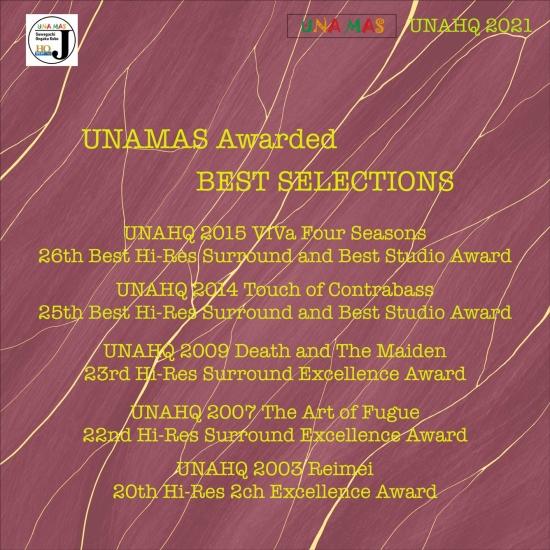
The album is a collection of gem that consist only of award-winning works of Professional Music Recording Award of Japan ‒ the most prestigious professional musical recording award in Japan ‒ and is a portfolio released by UNAMAS, the music label which has been releasing high quality works since 2007 the early days of Hi-Res surround sound.
The album contains 6 award-winning titles from 2013 to 2019 ‒ won awards 5 years in a row from 2015, and two of which had won the highest award ‒ and puts together three key elements which are Art, Technology, and Engineering. And it is filled with passion delivered by Mick Sawaguchi who contentiously leads the recording art scene. This detailed and full recording will be a milestone in recording art history for the future as a reference to quality music production works.
The Professional Music Recording Award of Japan It is the most prestigious musical recording award for professionals and is primarily intended to improve engineers’ technique as well as discover talented next-generation engineers by evaluating and rewarding engineers’ sensibility and technical ability toward music from applied works done by recording engineers who play their roles in the development of music culture and industry.
It has been co-organized by Japan Audio Society, Japan Association of Recording Engineers, Japan Association of Professional Recording Studios, and Recording Industry Association of Japan. The inaugural award took place in 1994, and this historical award celebrated the 26th anniversary in 2019.
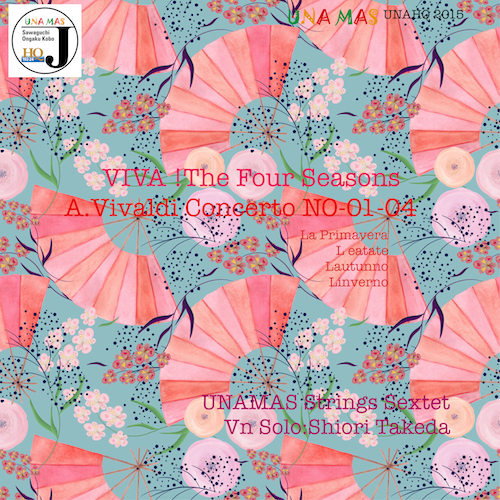
UNAMAS Label Seven years from 2013’s “Four Seasons” which achieved the annual album chart bestseller at JAPANand abroad as the first classic section to be commemorated.
In the intro of each movement representing the four seasons beatuful nature sound .
featured Shiori Takeda in Vn solo, the aesthetics of UNAMAS Strings Sextet play and the culmination of technology of the recording built up by Ohga Hall recording. Latest work “ViVa The Four Seasons”
M-01 RV 269. [SPRING] 11’28”
Allegro. Largo. Allegro
M-02 Concerto No.2 in g minor. RV 315. [SUMMER] 11’07”
Allegro non molto – Allegro. Adagio Presto Adagio. Presto
M-03 Concerto No.3 in F Major.RV 293. [AUTUMN] 12’11”
Allegro. Adagio molto. Allegro
M-04 Concerto No.4 in f minor. RV 297. [WINTER] 09’53”
Allegro non molto. Largo. Allegro
UNAMAS Strings Sextet
Vn Solo Shiori Takeda
Vn1 Jun Tajiri
Vn2 Fuuko Nakamura
Va Atsuko Aoki
Vc Makito Nishiya
Cb Ippei Kitamura
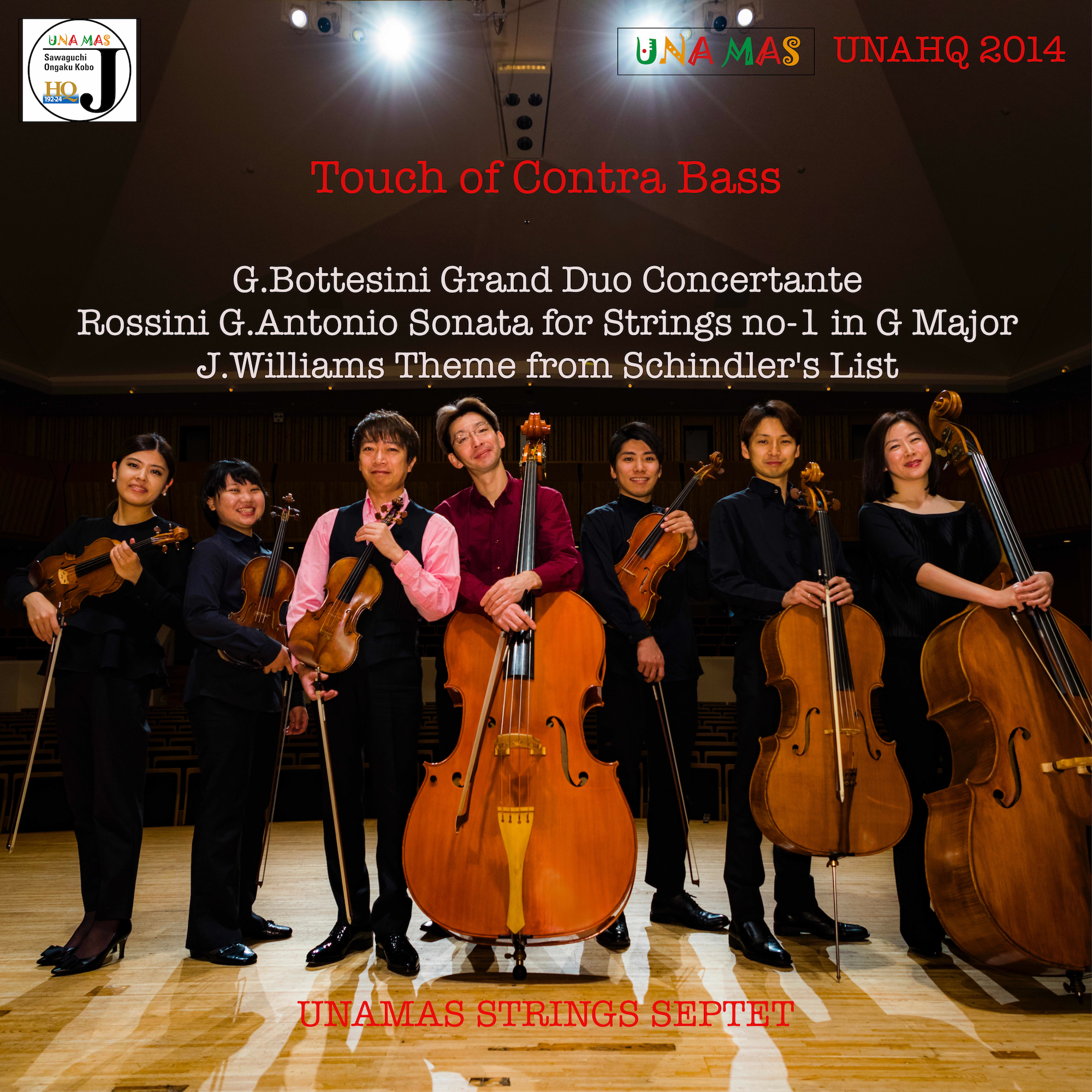
【HPL9】Touch of Contra Bass (G. Bottesini Grand Duo Concertante~Rossini G. Antonio Sonata for Strings no-01 in G Major~J. Williams Theme from Schindler’s List) highresaudio
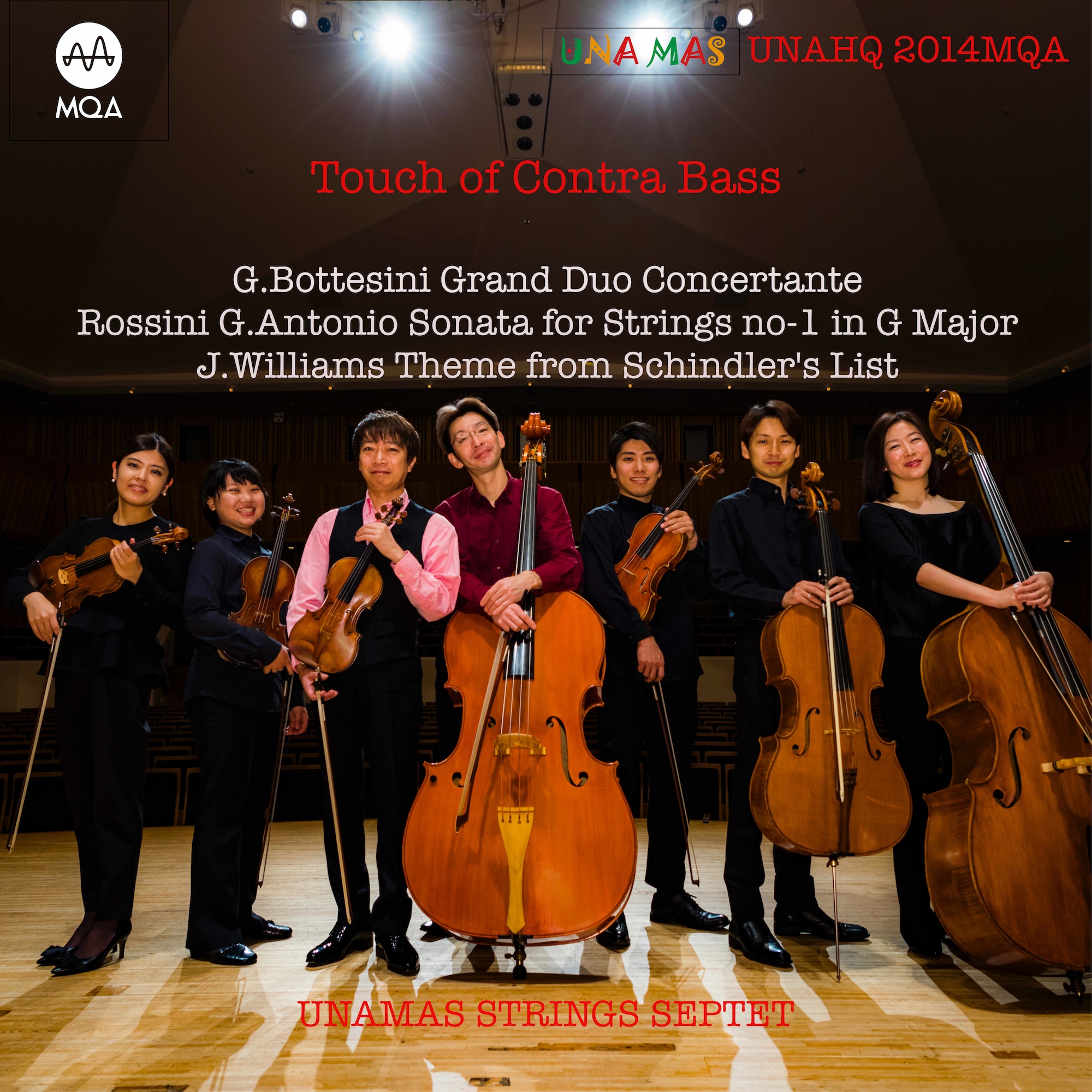
【MQA】Touch of Contra Bass (G. Bottesini Grand Duo Concertante~Rossini G. Antonio Sonata for Strings no-01 in G Major~J. Williams Theme from Schindler’s List)
The keyword “Italy” and “Contrabass” is the eighth album of UNAMAS Label at Ohga Hall by Mr. Mick Sawaguchi (Sawaguchi Masaki). Giovanni Bottechni’s “Violin & Contrabass + Grand Duo Concertante by five string players”, a masterpiece of Italian baroque contrabass, It is a truly ambitious program that Rossini’s string sonata No. 1 major in the formation of two violin, one cello, one contra bass, and the masterpiece of director Spielberg “Schindler’s list main theme” with a contrabass solo.
It is key that all contrabass is common to all. It was recorded on 11th and 12th December 2017. Mr. Sawaguchi states: “Contrabass always has a supporting role even in the played by classical music, but UNAMAS Label puts the concept of unifying the album production focusing on contra bass.
In this work, we pursued the delicate and low-range power of contrabass featuring solo instrument and rich sound of Ohga Hall.” Ippei Kitamura plays a solo contra bass. Tokyo Symphony Orchestra Contrabass Division. Solo violin is Jun Tajiri, a Tokyo Symphony Orchestra Assistant Concert Master. The 1st violin is Shiori Takeda of the Tokyo Symphony Orchestra No. 2 Violin section, Fuuko Nakamura of the 1st violin division of the Tokyo Symphony Orchestra, Viola is the viola division of the Tokyo Symphony Orchestra Chihiro Tai, and the cello by Makito Nishiya contra bass is Saya Sugano – free after Graduated from Music department of Tokyo University of the Arts
Unamas Strings Septet
Giovanni Bottesini “Gran Duo Concertante” 4K Music-Video
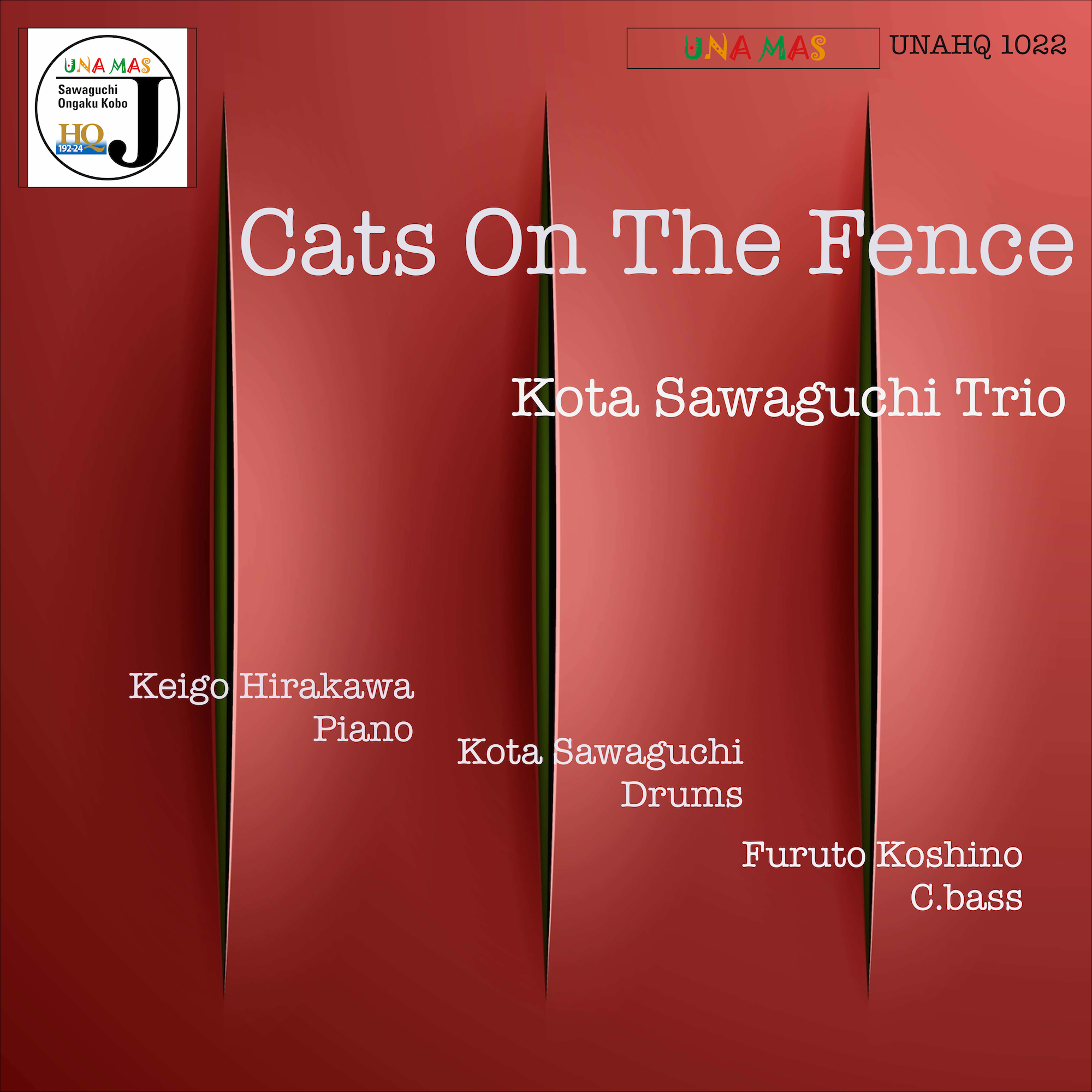
This is a first leader album by Kota Sawaguchi who plays drums. It is an album to have identical feelings while live performance at Jazz Club in TYO. With Keigo Hirakawa, a pianist living in America. Kota met him in the session in August 2017. Recording in May 2018, just before Hirakawa returned to the United States, Koshino Furuto was invited as the bass player that supports the trio. Please enjoy honest and free interplay that the trio each other felt at recording time.
In August 2017, UNAMAS monthly jam session hosted by me, Keigo Hirakawa suddenly appeared as a pianist. I remember that he had played 3 or 4 tunes that night, but by the time the jam session ended, I clearly imagined the conclusion that this album would be released. He has staying U.S.A, but one-year stay in JAPAN for his work. I invited the bassist Furuto Koshino and booked some of the live performances in the trio at once.
About that, Hirakawa’s piano was brilliant. It is not a matter of style, he does not hesitate to play the sound which he felt like “I want to play” at that time. Honesty with respect to the expression form of Improvisation, and I was struck by the traces of training to realize it.
Bassist Koshino also made a great contribution to the music of the trio. Besides thinking the meaning of the series of the preceding and succeeding sounds, he is devoted to the music of the place that he thinks best. It was able to prove by this work that it is one of the few bassists that can play a proper performance.
Keigo Hirakawa, piano
Furuto Koshino, double bass
Kota Sawaguchi, drums
Touch of Contra Bass(G. Bottesini Grand Duo Concertante~Rossini G. Antonio Sonata for Strings no-01 in G Major~J. Williams Theme from Schindler’s List)
The keyword “Italy” and “Contrabass” is the eighth album of UNAMAS Label at Ohga Hall by Mr. Mick Sawaguchi (Sawaguchi Masaki). Giovanni Bottechni’s “Violin & Contrabass + Grand Duo Concertante by five string players”, a masterpiece of Italian baroque contrabass, It is a truly ambitious program that Rossini’s string sonata No. 1 major in the formation of two violin, one cello, one contra bass, and the masterpiece of director Spielberg “Schindler’s list main theme” with a contrabass solo.
It is key that all contrabass is common to all. It was recorded on 11th and 12th December 2017. Mr. Sawaguchi states: “Contrabass always has a supporting role even in the played by classical music, but UNAMAS Label puts the concept of unifying the album production focusing on contra bass.
In this work, we pursued the delicate and low-range power of contrabass featuring solo instrument and rich sound of Ohga Hall.” Ippei Kitamura plays a solo contra bass. Tokyo Symphony Orchestra Contrabass Division. Solo violin is Jun Tajiri, a Tokyo Symphony Orchestra Assistant Concert Master. The 1st violin is Shiori Takeda of the Tokyo Symphony Orchestra No. 2 Violin section, Fuuko Nakamura of the 1st violin division of the Tokyo Symphony Orchestra, Viola is the viola division of the Tokyo Symphony Orchestra Chihiro Tai, and the cello by Makito Nishiya contra bass is Saya Sugano – free after Graduated from Music department of Tokyo University of the Arts
String quartet consists of the members satisfying the required skill of the instrument and expected to cover the solo part as well as the ensemble part to be overdubbed.
Four artists, one for each string instrument, manage the solo part in one of four seasons they are responsible for (Spring by Vn2, Summer by Vc, Autumn by Va, and Winter by Vn1 in this production). In order to achieve this goal, Ms. Shiori Takeda as leader made the ideal selection of the members, and we named the young artists’ team “The Quartet Four Seasons”.
Added a contrabass so that it could help representing Bach’s dignified low notes in the compact string ensemble, and the consequent placements of instruments for 5-voice polyphony was examined through the simulation by Finale application. Its result is as follows: LS: Vn1, FL: Va, FC: Cb, FR: Vc, LR: Vn2.
“Death and the Maiden” is the fourteenth work that Schubert composed. We chose this piece because the music structure is dynamic and dramatic, and we wanted to produce a classical work not in a sophisticated tradition of strings but rather in the style such as one performed by duo cellos now popular worldwide.
In order to enhance the progressiveness in the music framework, we weighed the balance of lows deeper by replacing the viola part with another cello that concluded the quintet of 2 violins, 2 cellos, and 1 contrabass. Following the arrangement, Mr. Tsuchiya derived 5-part performance data out of Finale application which we extended to experiment 5-channel surround mixes on Pyramix to simulate the ideal instrument layout and dimensions of surround sound. We concluded the option of violins in front L/R while cellos in rear L/R with the contrabass in front center, and the artists sat accordingly on the stage in Ohga Hall.
This album targeted to highlight the brilliant tones of Steinway Hamburg piano that belonged to Ohga Hall. The music brought here is original in jazz but with the elements of classical flavor based on the themes by Bach, Debussy and Beethoven. The performance is purely in jazz style to expand the main themes with free improvisations. The piano is the ultimate Steinway D274 model made in Hamburg that arrived in Japan in the 1970’s with Arturo Benedetti Michelangeli. Being infamous for cancelling as he was, he went back home before his last concert, and the inviter agent got hold of the instrument (S/N #427700) that later settled itself down in Ohga Hall by a happy chance.
UNAMAS Classics Series continues to support music in surround, and has been arranging the score originally in the style of UNAMAS. In this production, the instruments are arranged with 2 violins, 2 violas and 2 cellos as the basis in our original score that suits quite well with surround by itself, but we further have added a contrabass for low frequency enhancement resulting the recording of a string septet.
P.I.Tschaikovsky op – 70 Souvenir de Florence Unamas Strings Septet HIGHRESAUDIO
Info for P.I.Tschaikovsky op – 70 Souvenir de Florence
Orchestras often play this piece, but Tchaikovsky did not want it ending up to be perceived as a compact version of symphonic orchestration. This UNAMAS recording literally respects the composer’s intention allocating 6 solo voices – 2 violins, 2 violas, and 2 cellos – and further added a contrabass for enhancing deeper notes at lows. It helped bringing the music closer with the orchestral muscle while maintaining the preciseness of chamber music performance.
The recording session took place at Ohga Hall, Karuizawa on 13th and 14th December 2016. There exist good reasons for UNAMAS Classics series to stick with this Ohga Hall for recording.
UNAMAS Strings Septet
4K Music-Video
4K interview in English
P.I.Tschaikovsky op – 70 Souvenir de Florence Unamas Strings Septet
Began studying violin at the age of 7 under Yoshiko Honma and late Ryosaku Kubota. On graduating from Toho Gakuen College in 1988, he joined Gunma Symphony Orchestra and was assigned as Assistant Chief Violinist. His activity is based mainly in Gunma Prefecture for concertos with the orchestra as well as solo performance and chamber music.
In 1994, he participated in Prague Spring and Wiener Festwochen music festivals, and was invited to Tokyo Symphony Orchestra as Chief Violinist where he enjoyed the honor of performing the solo with the orchestra in the royal concert in Toka-Gakudo music hall in the Imperial Palace, and he was promoted to Assistant Concert Master in 1998.
Other recent activities include FM broadcast recital program of NHK in 2002, organizing Silius String Quartet in 2004, concert series in IMA hall in Tokyo Symphony SQ, and recordings in movie soundtracks and commercials as studio musician.
Shiori Takeda (Vn2 and Lead Vn at M-03 04 05)
Born in 1988. Graduated from Music Department of Tokyo University of the Arts in 2010 majoring violin instrument. Winner of Kyoto Mayor Award in Kyoto Art Festival “Gathering of Young Musicians Flying to the World”, and other contests such as National Music Students’ Competition, Japan Classic Music Competition, Yokohama International Music Competition, and Rumania International Music Competition.
While being a student, she was active in performing in solo, ensemble, or orchestra, and joined in various recordings and live concert support with the strings she took the lead. She took part in Tokyo Symphony Orchestra as violinist in 2012, and appears in high-res UNAMAS label releases as one of key members: “Four Seasons” in 2014 and “The Art of Fugue” in 2015.”Death and The Maiden”2016.
Aya Ohsumi (Va at M-03 04 05 06)
Graduated from Attached High-school of Japan Women’s University and Music Department of Tokyo University of the Arts, and now in the second year in its graduate school. Began lessons of violin at the age of 3, and changed the instrument to viola at 18. Award-winner in 11th Osaka International Music Competition. The First Prize winner in 13th Burckhardt International Music Competition. She joined Carl Flesch Akademie International in Germany in the summer of 2011 and achieved a diploma with scholarship on her graduation.
Studied violin under Yasuko Ohtani, viola under Kazunori Kawasaki and Kaoru Ohno, and chamber music under such professors as Kazunori Kawasaki, Katsuya Matsubara, Nobuko Yamazaki, Hajime Ohtomo, Ryoichi Fujimori and Hiroyasu Yamamoto. A member of TGS String Ensemble that consists of the graduated classmates of Tokyo University of the Arts, and now violist in Tokyo Symphony since April 2015.
Kanami Araki (Ob at M-01 02 07)
Born in Ibaragi in 1993 and began oboe lessons at the age of 9. Graduated from Tokyo University of the Arts at the head of her class and now in the master class in the graduate school while performing as primary oboist of Tokyo Symphony Orchestra. Unanimous First Prize winner and Audience Award as well at 11th Sony International Oboe Competition in Karuizawa. Many other awards such as Second Prize at 31st Japan Woodwind and Percussion Competition, Oboe Section, University’s Ataka Award and Acanthus Award.
She had her debut recital in April 2016 in Tokyo Spring Music Festival and also performed Mozart, Richard Strauss and Martinu concertos with Tokyo Geidai University Philharmonic and Tokyo Symphony Orchestra. Studied under professors such as Maki Sakamoto, Keiko Narita, Hitoshi Wakui, Yoshiaki Obata and Satoki Aoyama.
Makito Nishiya (Vc1)
Born in Nara. After graduating from Tokyo University of the Arts and its graduate school with master degree, he was accepted by Indiana University in the States for further study. He studied cello under such professors as Fumiaki Kono, Tomoya Kikuchi, Go Tsutsumi, and Janos Starker. Upon returning from the States in 2005, he participated in the initialization of Hyogo Art and Culture Center Orchestra led by Maestro Yutaka Sado. Variety of concert activities of his expand performing as soloist with Kazuyoshi Akiyama, Tadaaki Odaka, Yutaka Sado, and joined sessions with Yasuko Ohtani String Quartet, Ryota Komatsu Tango Orchestra, Live Image, Taro Hakase’s Violin Summit. In January 2013, he collaborated with Shigeo Neriki, pianist to have joint recitals in Tokyo and Kyoto, which was well received winning Aoyama Music Award of the year. In 2015, He formed the unit “ShimizuNishiya” together with Yasuaki Shimizu, the head of violinists in Tokyo Symphony, and released the debut CD album “KODO” that covered only their original compositions by overdubbing just by themselves. He is now the head of cellists in Tokyo Symphony and part-time teacher in Tokyo University of the Arts while being active in composition, arrangement, and performance.
Yukinori Kobatake (Vc2)
Graduated from Tokyo University of the Arts with the master’s degree. Studied under Toshio Mase, Hiroyuki Kaneki, Masaharu Karita, Nobuko Yamasaki, and Ryoichi Fujimori. Participated in Ozawa International Chamber Music Academy. Performed as contracted cellist in Tokyo Philharmonic Orchestra, and now his activity widely ranges from solo and chamber music to recordings. Ippei Kitamura (Cb)
Born in Saitama and graduate of Tokyo University of the Arts in 2002, then achieved the master’s degree in 2005. Being a university student, Kitamura joined in Beppu Argerich Festival. In 2005, he played the soloist in “Pentatonicophilia” composed by Julian Yu in the International Gaudeamus Music Week. In 2006, he joined in Seiji Ozawa Music Class VII “Resurrection”. He studied contrabass under such professors as Yoshio Nagashima, Ganju Kuroki, Naofumi Nishida, Osamu Yamamoto, and Shigeru Ishikawa, and his activities range from orchestras to brass bands, studio sessions, and musicals. After working in Tokyo University of the Arts as lecturer, he continues to be a member of Tokyo Symphony Orchestra. Now studying in the master’s degree section of musicology in Tokyo University of the Arts.
Yoichi Tsuchiya (Arranger)
Born in Shibuya, Tokyo and began studying piano at 20 and then composition afterward. Graduated from the Composition Section of Tokyo University of the Arts in 2011. Studied composition under late Akira Kitamura, Yuzuru Kondoh, Hiroyuki Yamamoto, Masaki Teruya, and Junnosuke Yamamoto. Also learned sound design from Mick Sawaguchi, recording from Toru Kamekawa, and engineering from Masaaki Enatsu.
His production “Prelude 5.1” in 5.1ch represented Japan Student Section in 130th AES Convention London Recording Competition, Modern Multi-track Studio Recording. In Recording Critics of the 131st AES Convention New York, “Cori Spezzati Nova” (5.1ch) was highly praised by Elliot Scheiner who is producer and mixing engineer of the Eagles, Aerosmith, Steely Dan and other well-known artists. Morten Lindberg of 2L label commented “music I’ve never heard”.
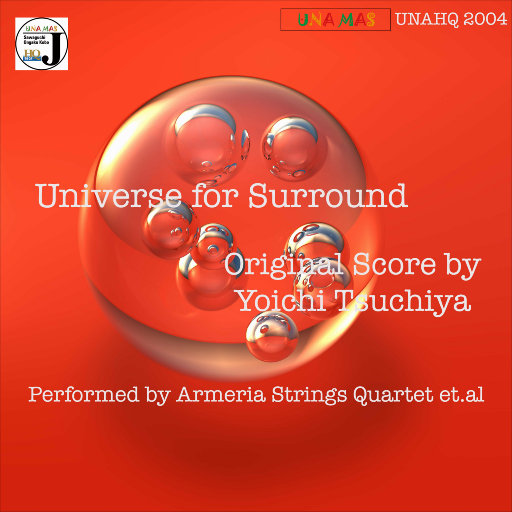
In 2012, he won the 5.1 Music Production Award of DTM magazine. In 2014, “The Universe for Surround”, a collection of surround compositions, was released under UNAMAS label.